How I went from “a couple of servers” to “a full rack in my garage”

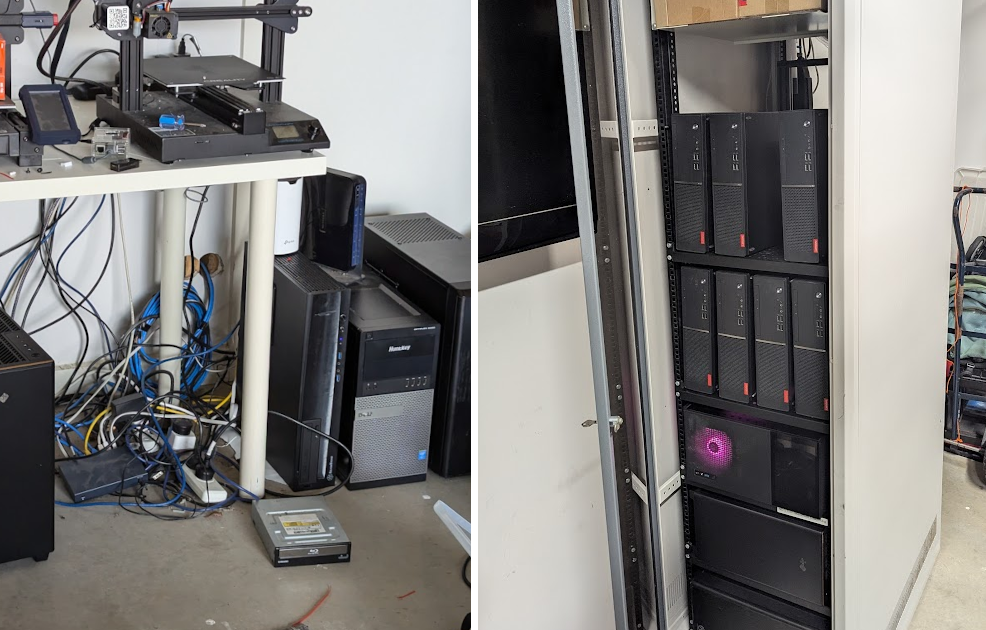
I’ve had a couple of computers running as servers in my house for some time now. They have mostly been used for running open-source, self-hosted applications such as Frigate NVR, OctoPrint, WireGuard, Audiobookshelf, Home Assistant, and some game servers. Recently I started a Kubernetes cluster on them, databases, CI/CD, and self-built applications. While my current setup still has plenty of headroom, when I had the opportunity to pick up a bunch of office surplus machines, I couldn’t help but say yes sight unseen.
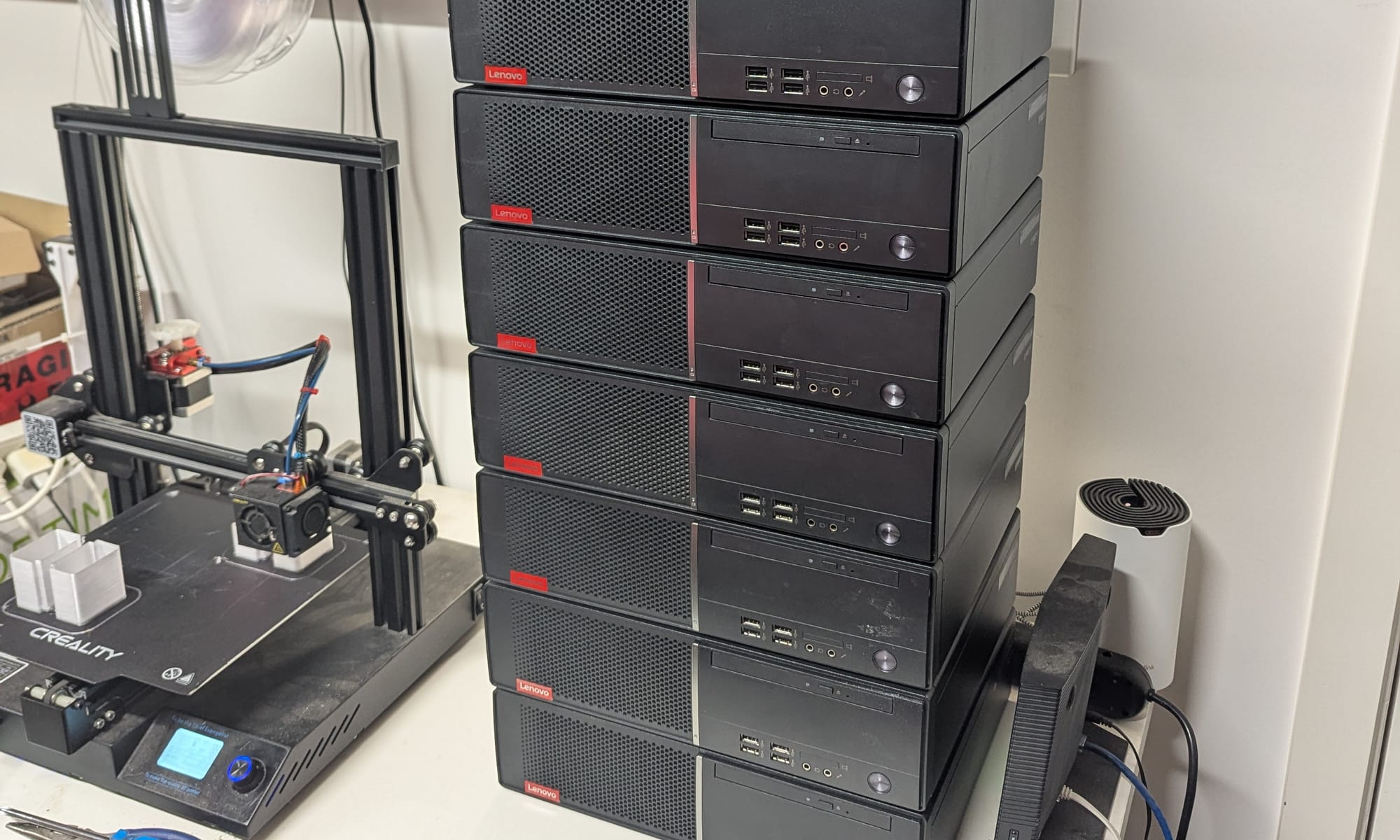
I ended up with a stack of seven Lenovo V520s, each with 24 GB of DDR4 memory and a 7th‑gen i5 CPU. Since they’re 7th‑gen machines, it makes sense that they were retired when Windows 11 dropped support for that generation. That doesn’t mean, however, that they are useless. Many, if not all, Linux-based operating systems still support them and will do so for the foreseeable future. I now have ten PCs sitting in my garage, and it was already pretty messy and horrible‑looking with just three.
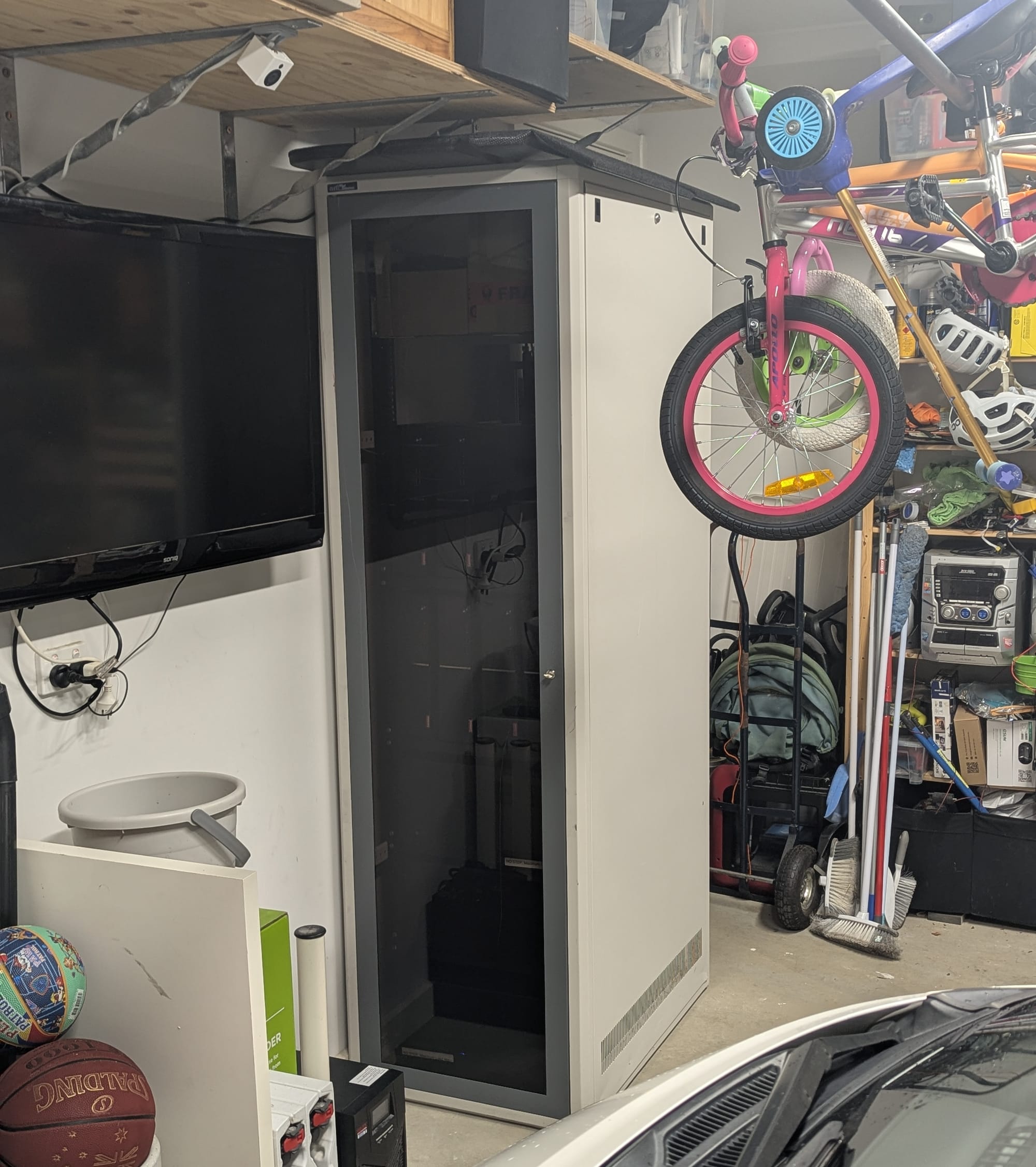
I figured it was time to go vertical. I’d been thinking about getting a server rack for a while, but originally I planned to build a wooden one. The wooden‑rack path, though, wasn’t going to be cheap. I’d still need to buy a set of rack rails, and those alone would cost around $120 for the front and rear rails. I’d kept my eye on server racks going on Facebook Marketplace for quite a while and I did miss a couple of good deals then I saw this amazing deal come up. A full‑size 42U rack with 6 shelves, side panels and a door. Shelves are something that it’s hard to get for cheap so as soon as I saw it I knew I had to act quick.
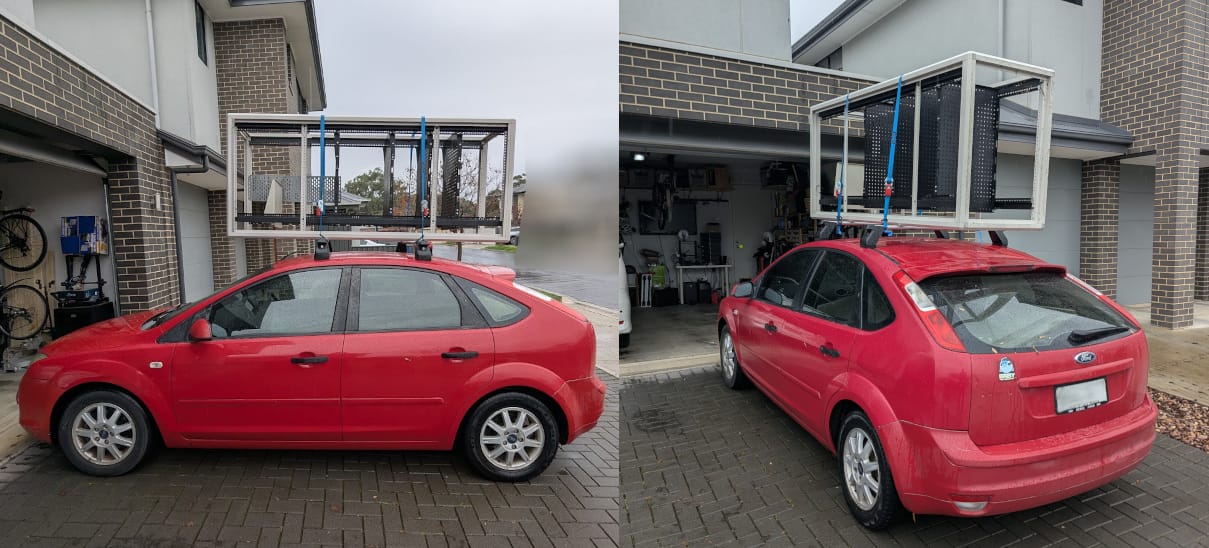
I decided that even if I didn’t want the full rack, I could still harvest parts from it. It came with rails, shelves, cage nuts, and bolts. So I got in my trusty hatchback and headed off to pick it up. Side note: you can really fit a lot into these mid‑sized hatchbacks. The rack went on the roof, and the side panels and doors fit inside with ease. It’s basically a station wagon.
When I got it home and cleaned it up, I had to decide what to do with it. After debating with myself for ages, I decided to keep the rack as-is. A custom wooden rack could have had a smaller footprint, but it wouldn’t have supported the standard 900 mm server depth. Keeping the full rack meant staying compatible with proper server gear and any future deals that might come my way.
I’d find a way to make it fit.
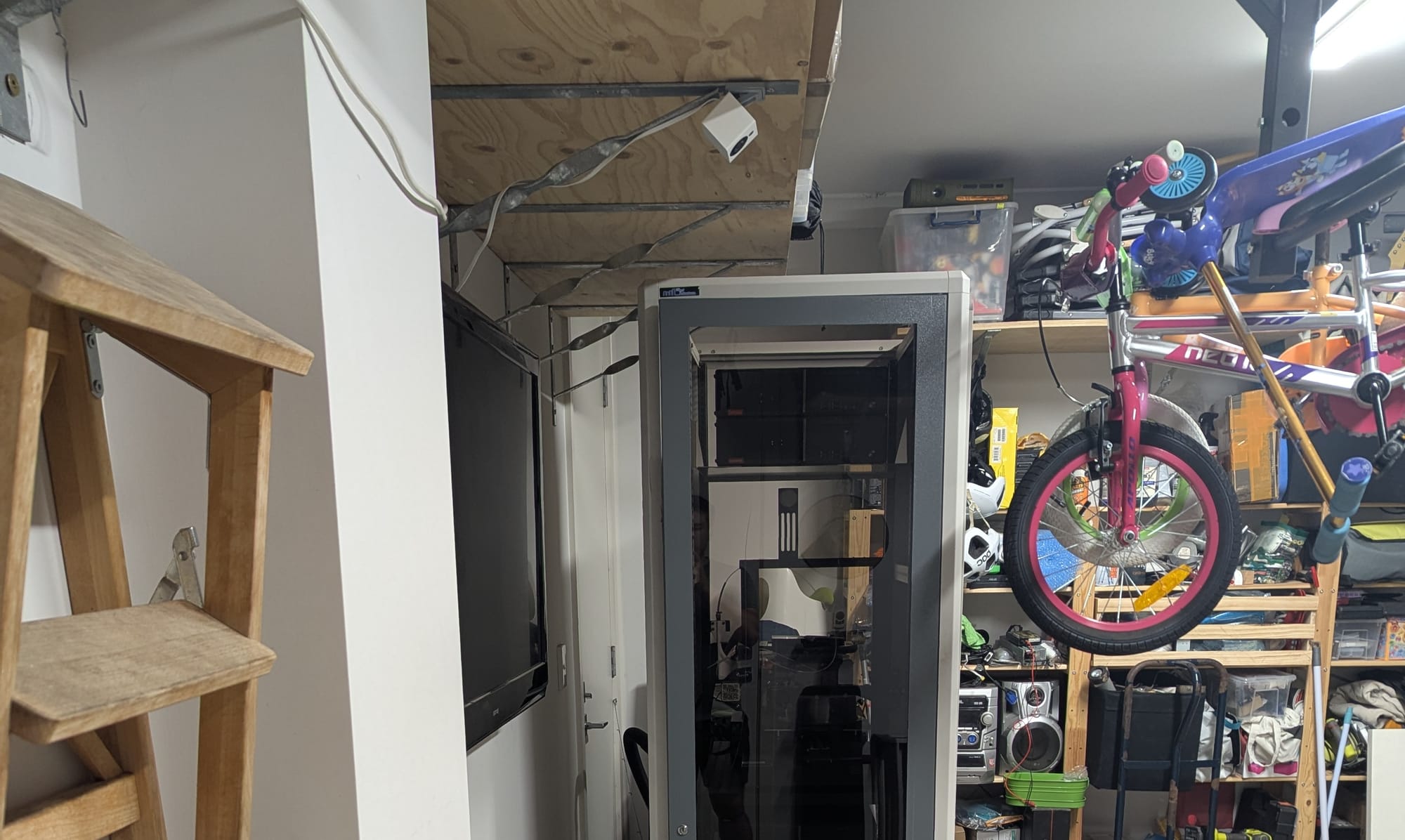
Speaking of fit, the rack didn’t quite work as-is. At 2120 mm tall, it couldn’t sit flush against the wall because of the garage shelves. The next day I took down the shelf, cut it in half, and raised half of the shelf higher, just enough room to fit the rack in. After loading all my gear into the rack, I realised I actually had enough gear to fill it out. Not so much in terms of depth, but definitely across the front. I was able to use some of the depth to fit my 3D printer in the rack too, so it really all came together.
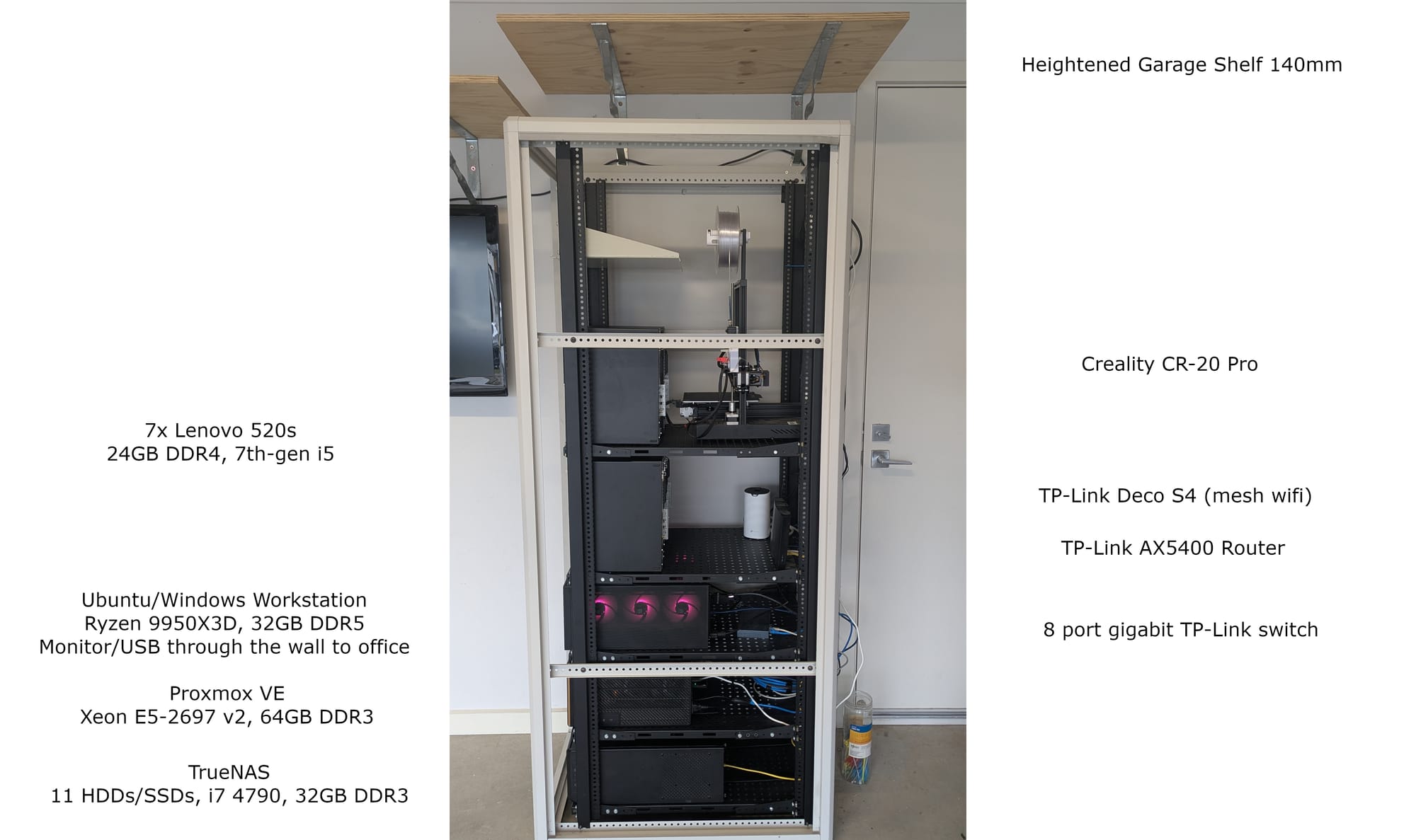
I still have a lot to do here.
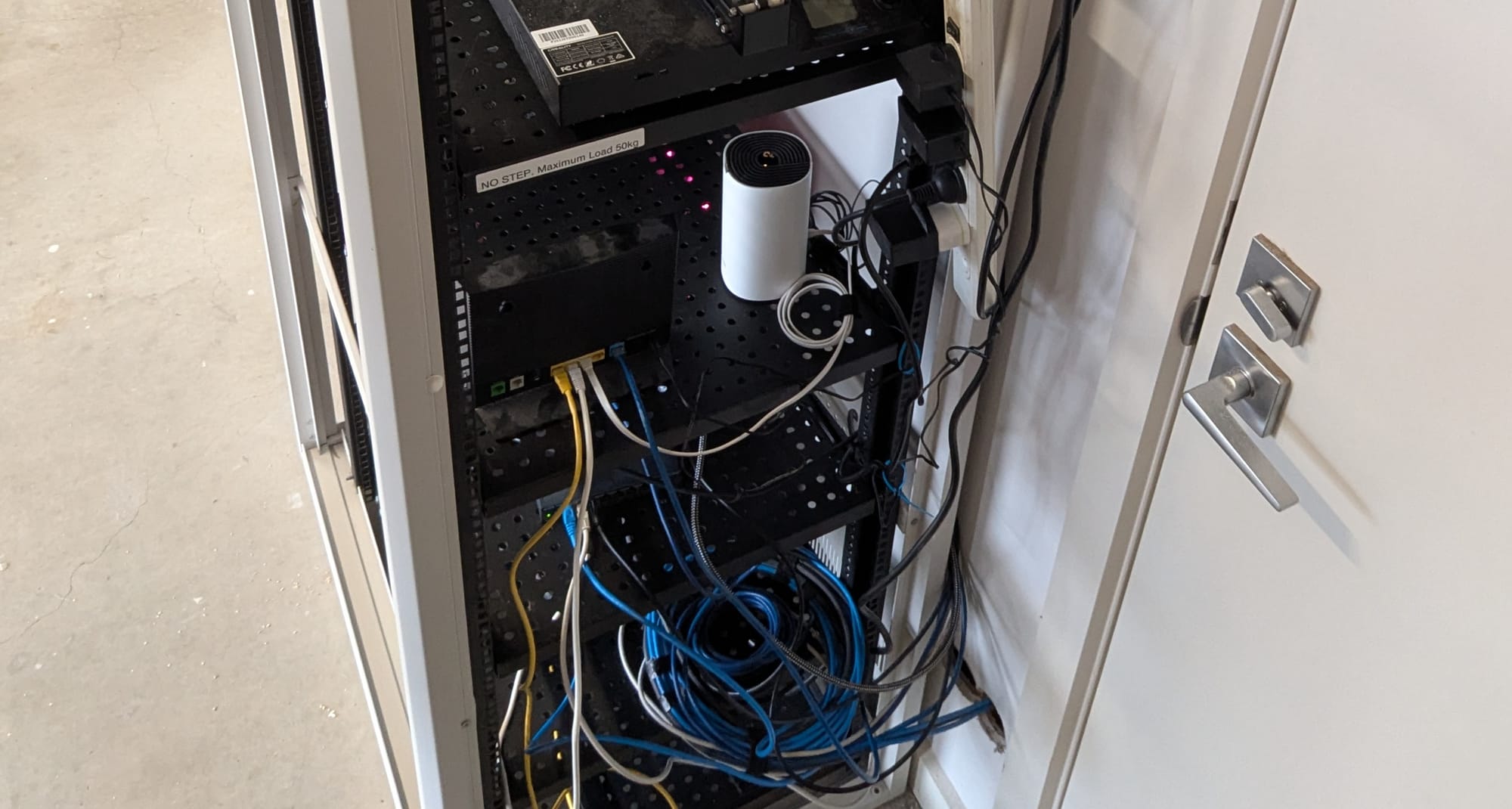
It would be nice to pick up a network switch and route all the cables neatly. That shouldn’t be too hard, since used gigabit switches are going cheap these days and Umart is close enough that I can grab cables in the right lengths.
I haven’t even plugged in the Lenovos yet because I still need to plan out the power cabling. PDUs (Power Distribution Units) aren’t easy to find second‑hand, so I want to get that part right before I start wiring everything up.
I still haven’t figured out what to do with all the Lenovos yet. I’m thinking about using one as a dedicated OPNsense or pfSense router. Another could run Home Assistant, since it would be nice to keep that up even if other things go down. The rest could become Kubernetes nodes on bare metal instead of running as VMs on my Proxmox machine.
So now I’m one of those guys who just casually has a full‑size server rack in his house. I’ll admit I partly did it for the memes, but going vertical has genuinely tidied up the space. And now it feels like I’ve picked up yet another hobby to enjoy.
If anyone has any thoughts or improvements, I’d be really keen to hear them. I’m a software developer, so I’m still pretty naïve about the norms that people in physical infrastructure roles take for granted.
And just to be clear, you don’t need a setup like this to get into homelabbing at all. Even a single old PC can teach you heaps, especially once you start running your own DNS, reverse proxies, containers, routing, all the fun stuff.